
What Does Microbiome-Friendly Mean?
Understanding the Growing Focus on the Skin Microbiome
The term microbiome-friendly is appearing more frequently across skin care and personal care products — but what does it actually mean?
Microbiome-friendly skin care is generally designed with consideration for the natural community of microorganisms that live on the skin. Rather than viewing all microorganisms as something that needs to be removed, this approach recognizes that a diverse and balanced skin microbiome plays an important role in maintaining healthy-looking, resilient skin.
Understanding microbiome-friendly skin care starts with understanding the ecosystem already living on our skin.
What Is the Skin Microbiome?
The skin microbiome is the community of microorganisms that naturally live on the surface of the skin, including bacteria, fungi, viruses, and other microbes.
Everyone's microbiome is different, and its composition can vary across different areas of the body. Factors such as age, environment, lifestyle, hygiene practices, and the products applied to the skin can also influence this microbial community.
These microorganisms interact with one another and with the skin itself, creating a complex ecosystem that contributes to the skin's natural balance.
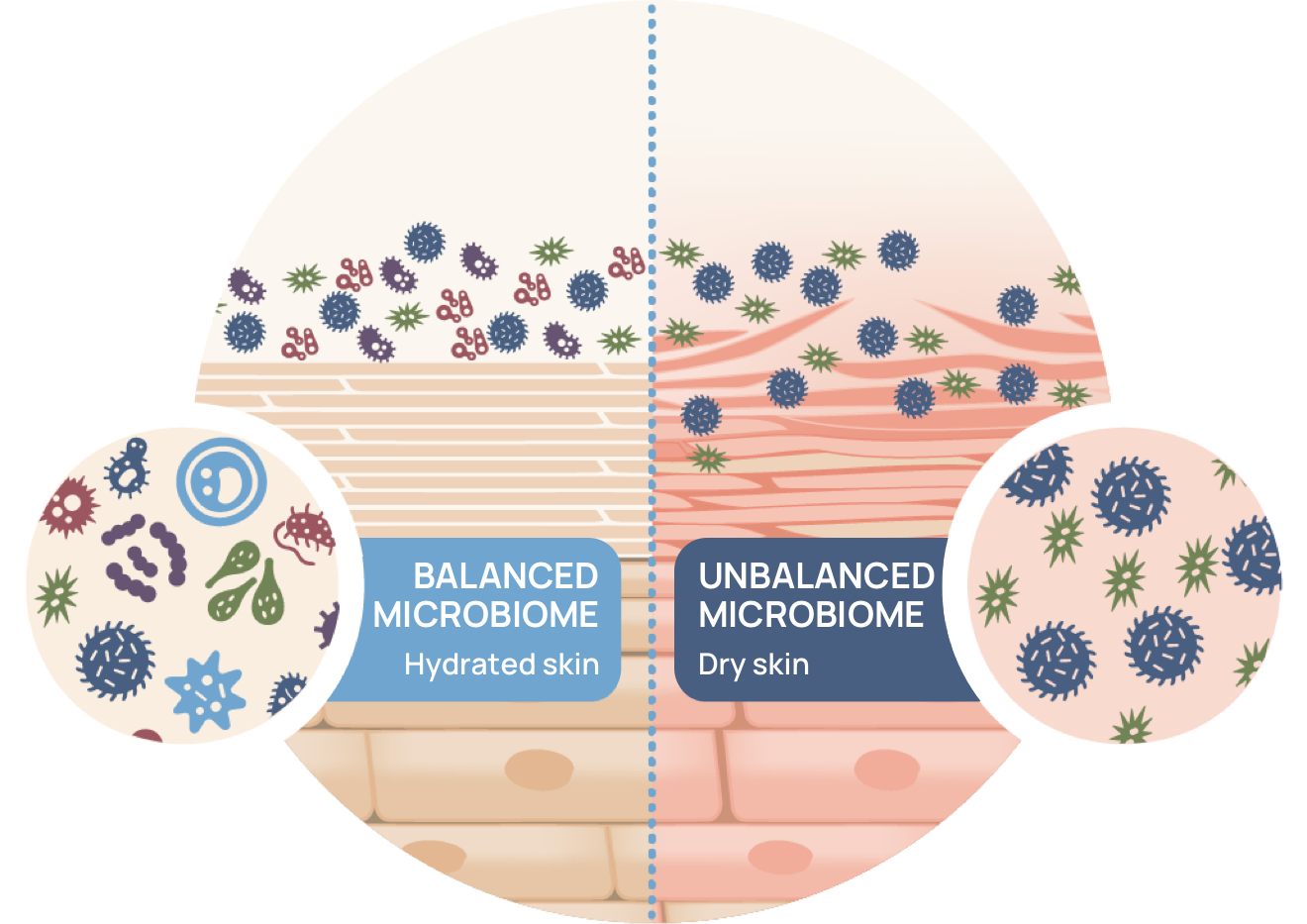
How Does the Microbiome Affect Your Skin?
Microbial Balance & the Skin Barrier
A healthy skin microbiome works alongside the skin barrier, the outermost protective layer of the skin.
When this ecosystem is balanced, beneficial and commensal microorganisms can help support an environment that discourages the overgrowth of less desirable microbes. The microbiome also interacts with the skin's immune system and contributes to the conditions that help the skin maintain normal barrier function.
For the skin, microbial balance can support:
Skin barrier function
Moisture retention and hydration
Protection against environmental stressors
Normal immune responses
A balanced skin environment
Overall healthy-looking skin
This is why the microbiome and skin barrier are increasingly viewed as interconnected parts of skin health rather than completely separate systems.
Prebiotics, Probiotics & Postbiotics in Skin Care
Three Different Approaches to Microbiome Care
As interest in the skin microbiome has grown, prebiotics, probiotics, and postbiotics have become increasingly common terms in skin care.
Prebiotics are ingredients intended to provide nutrients or substrates that can be utilized by beneficial microorganisms. In skin care, the goal is generally to help support an environment where desirable members of the skin microbiome can thrive.
Probiotics are live microorganisms that, when administered in adequate amounts, provide a health benefit. Because maintaining live microorganisms within cosmetic formulations can present formulation and stability challenges, true probiotic skin care requires careful consideration.
Postbiotics refer to preparations of inanimate microorganisms and/or their components that provide a benefit. In personal care, this growing area includes ingredients derived from fermentation and microbial processing, such as certain ferment lysates.
While each approach is different, they reflect the same broader shift toward developing products with greater consideration for the microorganisms naturally associated with the skin.
What Does a Healthy Skin Microbiome Do?
Balance Matters More Than Eliminating Microorganisms
The goal of microbiome care is not to create skin without microorganisms. Microorganisms are a natural part of healthy skin.
Instead, the focus is on maintaining a balanced microbial ecosystem.
A healthy, balanced microbiome can work together with the skin barrier to help maintain an environment where the skin can function normally. Greater microbial stability can also help prevent individual microorganisms from becoming disproportionately dominant within the community.
For this reason, microbiome-conscious skin care increasingly focuses on preserving microbial balance rather than indiscriminately removing microorganisms from the skin.
How Can You Support the Skin Microbiome?
Creating a More Microbiome-Conscious Skin Care Routine
Supporting the skin microbiome does not necessarily require a complicated routine. In many cases, it begins with avoiding unnecessary disruption to the skin's natural environment.
A microbiome-conscious approach can include gentle cleansing, avoiding excessive washing or harsh cleansing practices, supporting the skin barrier with appropriate moisturization, and selecting products designed with skin and microbiome compatibility in mind.
Formulations containing prebiotics, postbiotics, fermented ingredients, and other microbiome-focused technologies are also becoming increasingly available as formulators explore new ways to support or preserve the skin's natural microbial environment.
The goal is not necessarily to change the microbiome. In many cases, it may simply be to work with the ecosystem that is already there.
So, What Does “Microbiome-Friendly” Really Mean?
Microbiome-friendly skin care represents a shift in the way we think about clean and healthy skin.
Rather than assuming that fewer microorganisms automatically means cleaner or healthier skin, microbiome-conscious formulation recognizes that microorganisms are a natural and important part of the skin's ecosystem.
Ultimately, microbiome-friendly means considering how a product interacts with that ecosystem and aiming to preserve its natural balance while delivering the intended skin care experience.
As our understanding of the relationship between the skin microbiome, skin barrier, and overall skin health continues to develop, microbiome-friendly formulation is likely to remain an important area of innovation in modern skin care.
[ Explore Our Clinically Tested Microbiome-Friendly Ingredient ]